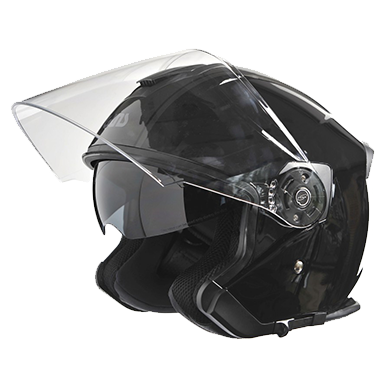
What is certimoov?

Project description

Certimoov is a test protocol developed by scientists to objectively test the protection capacity of equipment.
Today, Certimoov is starting by testing motorcycle and bicycle helmets. For this, a new method was created to evaluate helmets in more realistic conditions by taking into account new types of impact and brain injury criteria. The result is visible on this site in the form of a rating out of 5 for each headset.

Read more
Image
description_0
Image
historie_0

History of certimoov

Why a new test method in addition to the existing standard?

Complement and reinforce
current standards

European standards test helmets in a rectilinear impact situation, that is to say perpendicular to the impacted surface. Additionally, the acceptance criterion for a helmet is based on the acceleration recorded with a rigid headform which does not accurately represent the human brain. Finally, the standard has a yes/no acceptance criterion: either the helmet is accepted by the standard or it is not. 
Certimoov recreates more realistic shocks (oblique shocks) and integrates the new analysis model to measure the impact of a shock on the brain. Certimoov's tests, more precise, more concrete, more realistic, allow a precise estimation of the risk of brain injury and classify helmets according to their level of safety using scores ranging from 0 to 5.

Image
method-img_0
Image
img-3

New developments in
biotechnology

Certimoov uses new features to improve its testing method. The test bench makes it possible to reproduce more realistic impacts (by angle and speed for example) and a new digital model of the head is used. This model makes it possible to calculate the mechanical response of the brain and allows biomechanists to calculate the fairest score for each impact.

Changing
mentalities

The objective of Certimoov is to inform. Inform users but also manufacturers and authorities about the level of equipment protection. Thanks to these comprehensive tests, users can use the safety criterion in their choice of helmet thanks to clear and more detailed results than the passage of the current standard. Manufacturers can use Certimoov's tests to further improve the safety level of their helmets and contact Certimoov if they want more details on the test method or its results or the University of Strasbourg if they want to evaluate prototypes. They can also integrate the methodology into their internal product development.

Read more

Understanding notes

The details of the notes

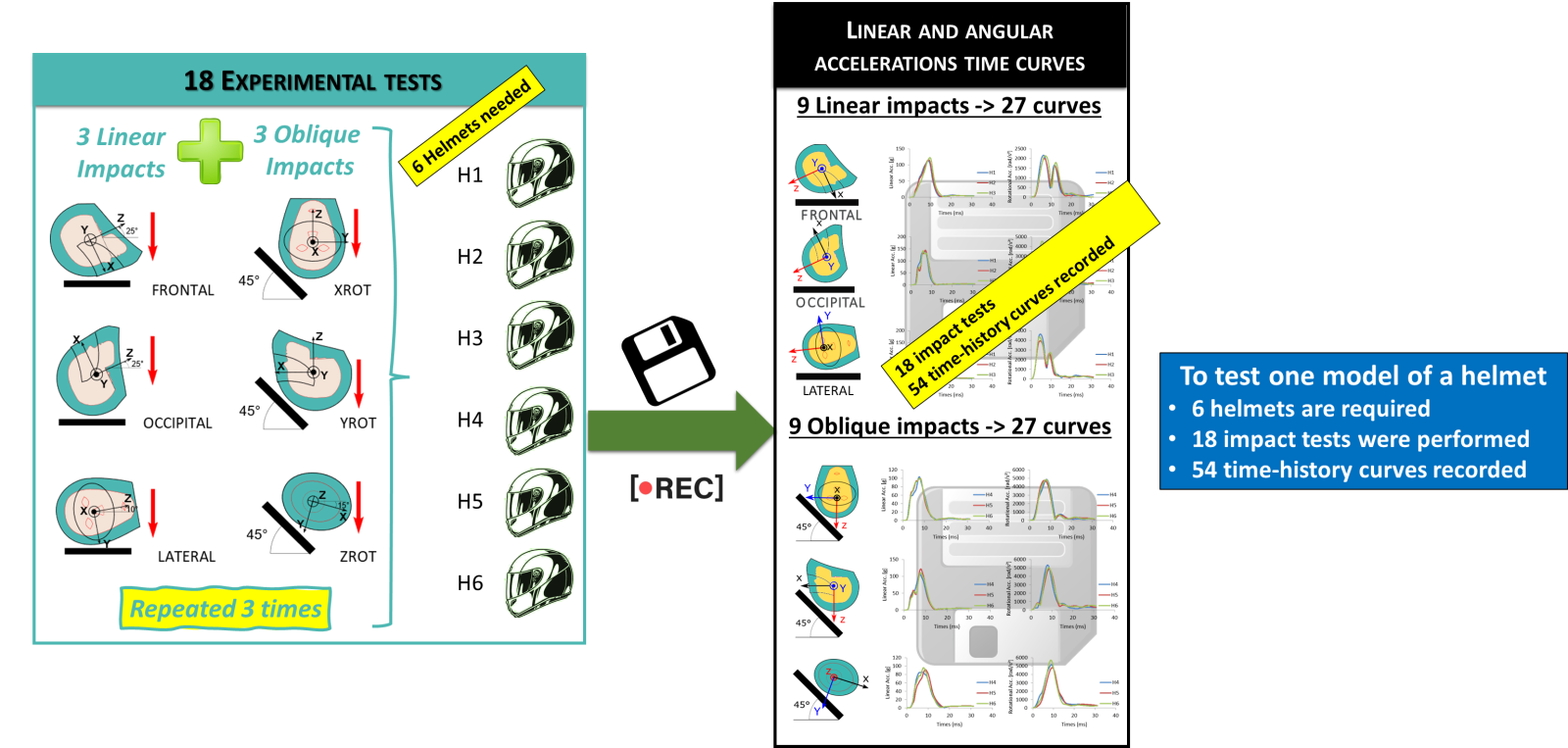
In total, 6 types of shocks are tested: 3 perpendicular shocks and 3 oblique shocks. Each shock is repeated 3 times, requiring a total of 6 helmets to obtain a total score. Each shock produces 6 curves which represent linear and rotary accelerations.

Example of curves produced by the frontal impact test

Image
Les détails des notes

Calculating the overall score

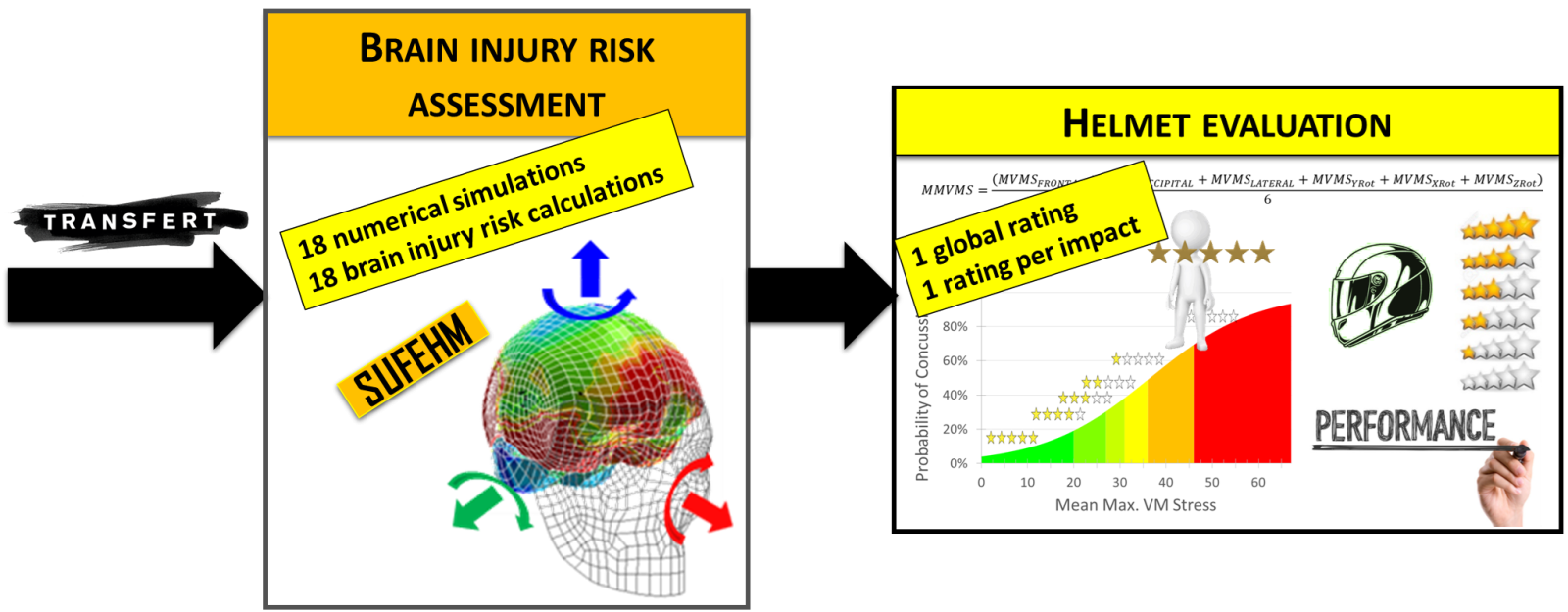
The overall score is an average of the 6 scores. It can be seen on the “helmet sheets” and allows helmets to be ranked from best to worst rating. The 5 star rating therefore represents the helmet with the best test results and the rating of 0 will be awarded to the least safe helmet according to the Certimoov method.

These curves are introduced into the mechanical modeling of the brain, which allows biomechanists to estimate the level of injury risk for each impact and produce a score between 0 and 5.

Image
notes-graph_0

Points of attention

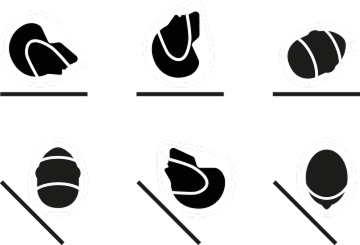
Impact points tested

The impact points tested are frontal, lateral and occipital. They represent different types of impacts that can occur in the event of a traffic accident.

Image
points-1_0

The limit on jet helmets

Please note: on this site, jet helmets may have a better safety rating than full-face helmets. This is because Certimoov tests the impact of a shock on the brain and not on the face.

Image
les-casques-jet